The Cornfield Classic International Motorcycle Race

Begin the story

The 200 mile World’s Championship
at Marion unofficially marked the return
of motorcycle racing to post-war America.

It was a hugely popular event, with more than fifteen thousand fans in attendance. Motor cyclists came from everywhere. They came from the East and the West; the North and the South. They came in in bunches of two’s, three’s, eight’s, ten’s and twenty’s until there were so many hundreds and hundreds of them thronging the streets that the sight of them sent a thrill through one.

Indian Motorcycle logo Harley-Davidson Motor Cycles logo Excelsior motorcycle logo
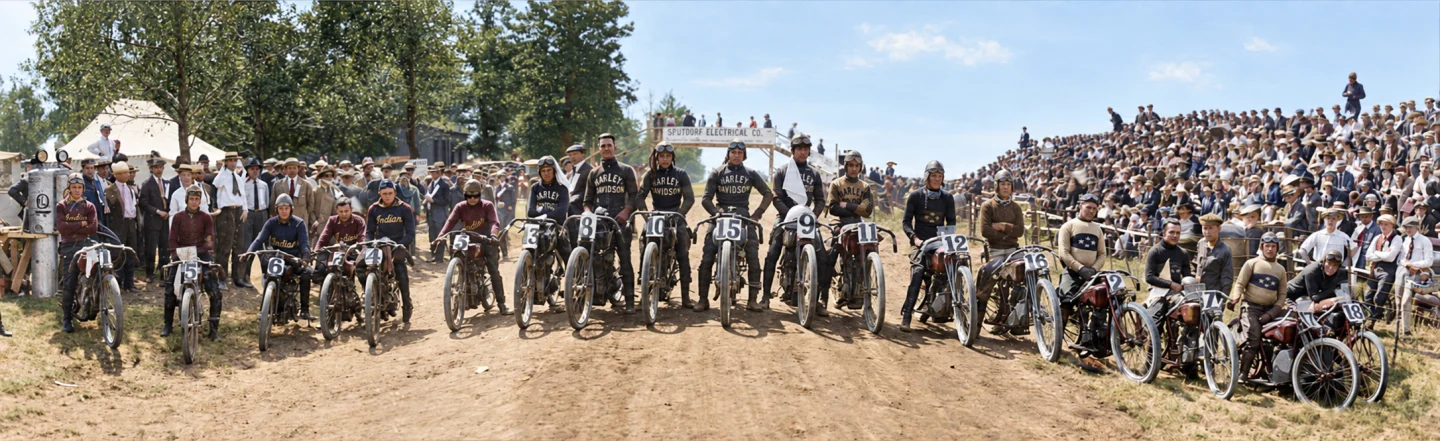
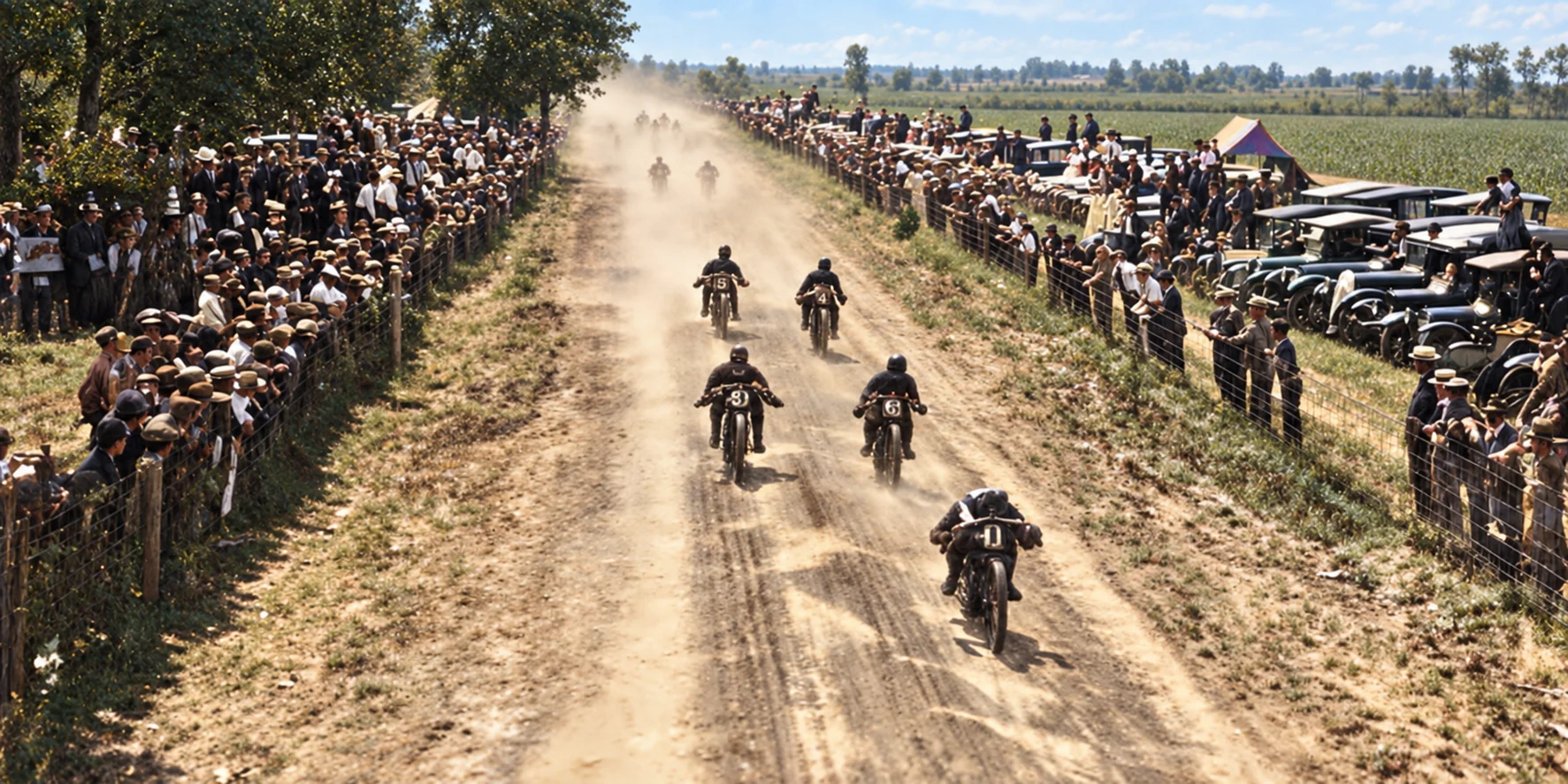
Colorized panoramic view of the Cornfield Classic racers and crowd

No athletic event in the history of the country compares with it in importance or interest.

Interest in the 200-mile international road race to be held in Marion, Indiana is increasing like the heat of dog-days. The race is to be one of the biggest events of the summer, and the list of entries for the race is filling riders everywhere with a desire to get to Marion. From day to day letters are coming in from all parts of the country from riders who are priming and oiling for on big tour to this great Mecca for motorcyclists.

This feature will add greatly to the success of the race. The fact that in different parts of the country motorcycle clubs are planning on driving their machines to Marion, leaving their homes in time to reach the course the night before the race, and starting home after its finish is going to draw thousands of good fellows and certainly sounds like the start of a good time.

It is certain that Milwaukee will send as many as 200 machines. There will be another party composed of riders from the mid- Atlantic and New England states which will be made up at Springfield, Mass. Parties too numerous to mention are being formed in Indiana. And certainly there will be parties leaving from Chicago and Illinois.

Authorities say the race will be the greatest event of the kind in the history of the world. Riders from every part of the country and at least fifteen thousand visitors will be attracted. No athletic event in the history of the country compares with it in importance or interest.

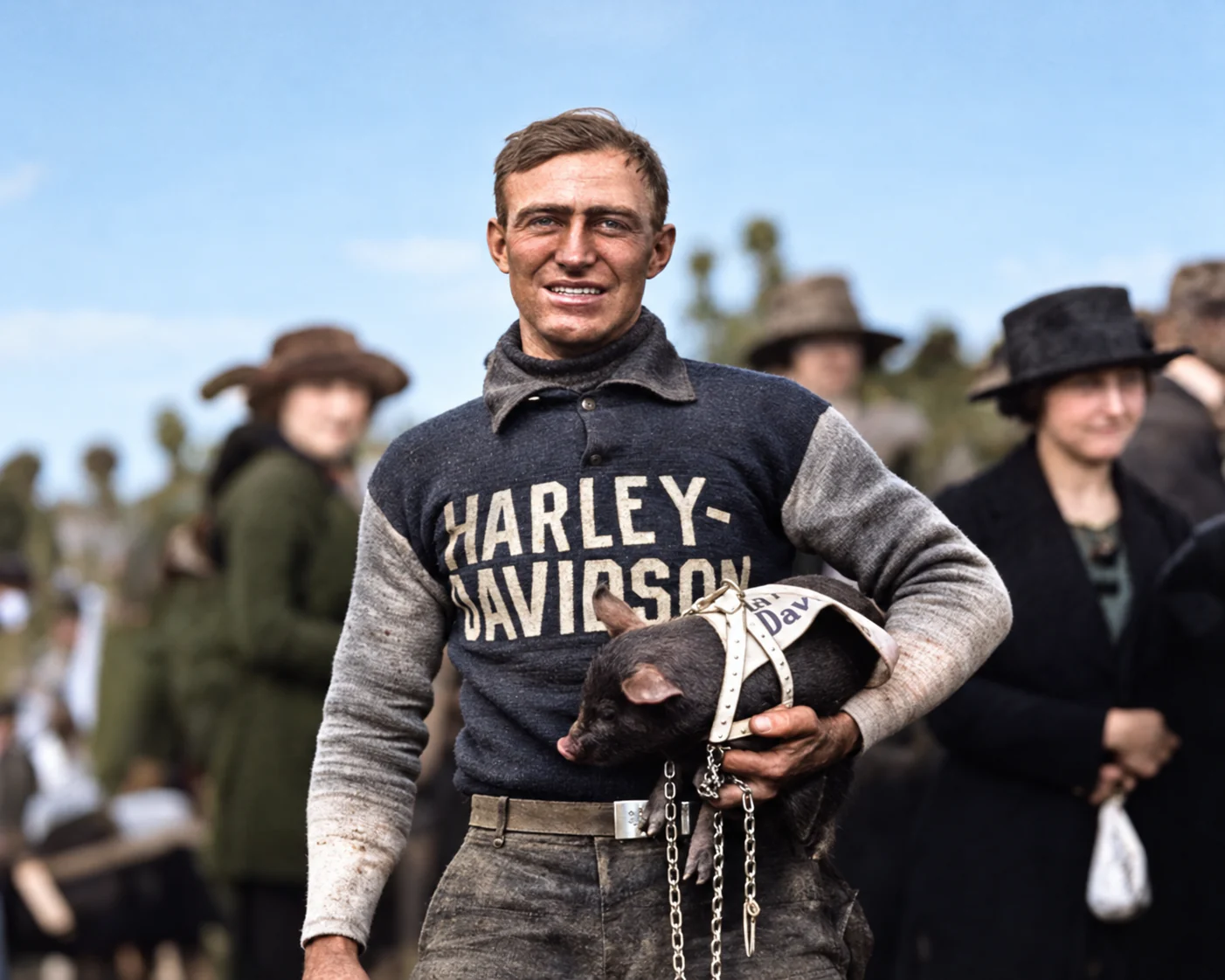
Restored and colorized photograph of Ray Weishaar and the pig mascot against the original blurred outdoor background, with sharpened race tickets
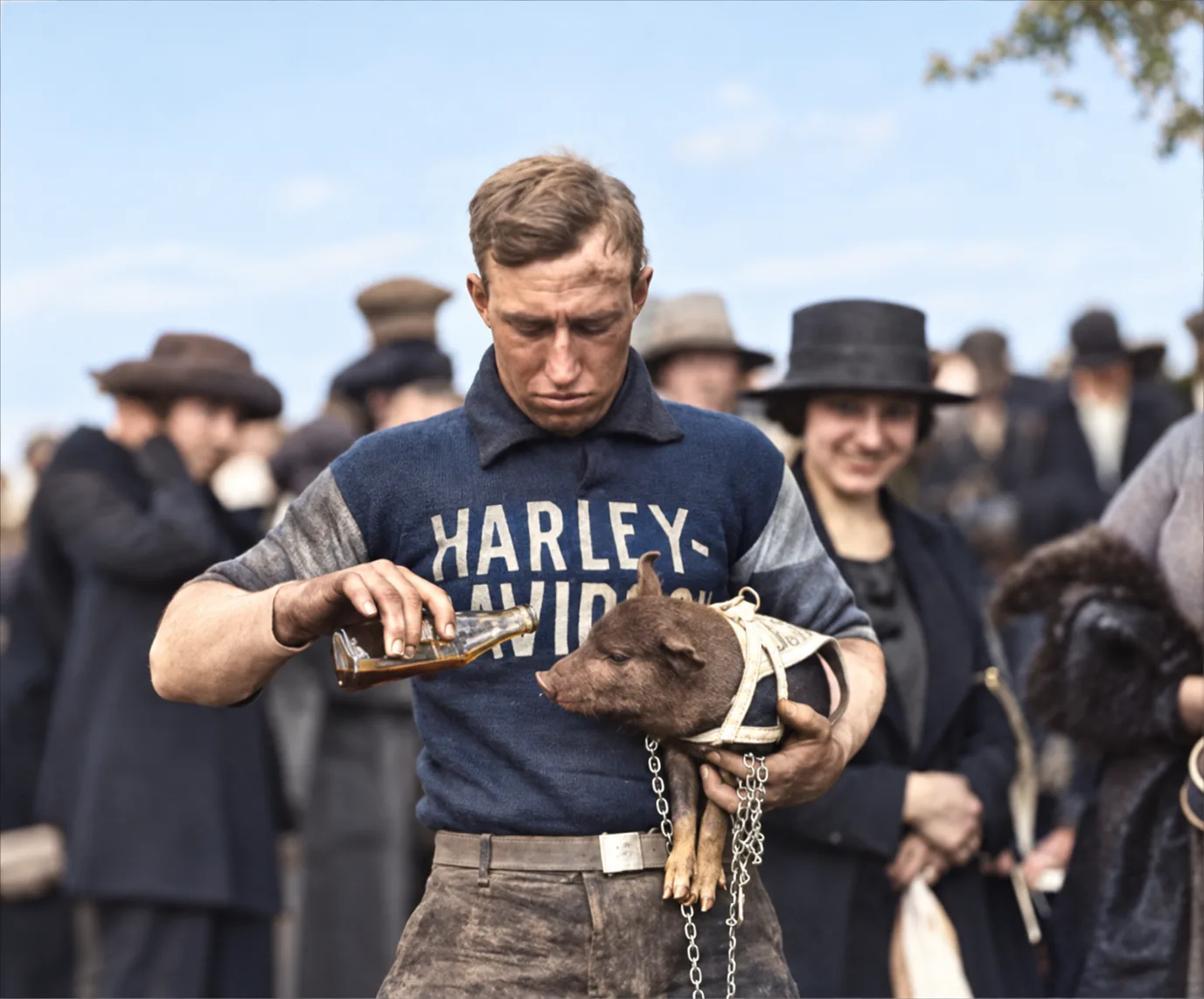
Riders at the 1919 Marion, Indiana motorcycle race Restored photograph of Ray Weishaar with the Harley-Davidson team mascot pig
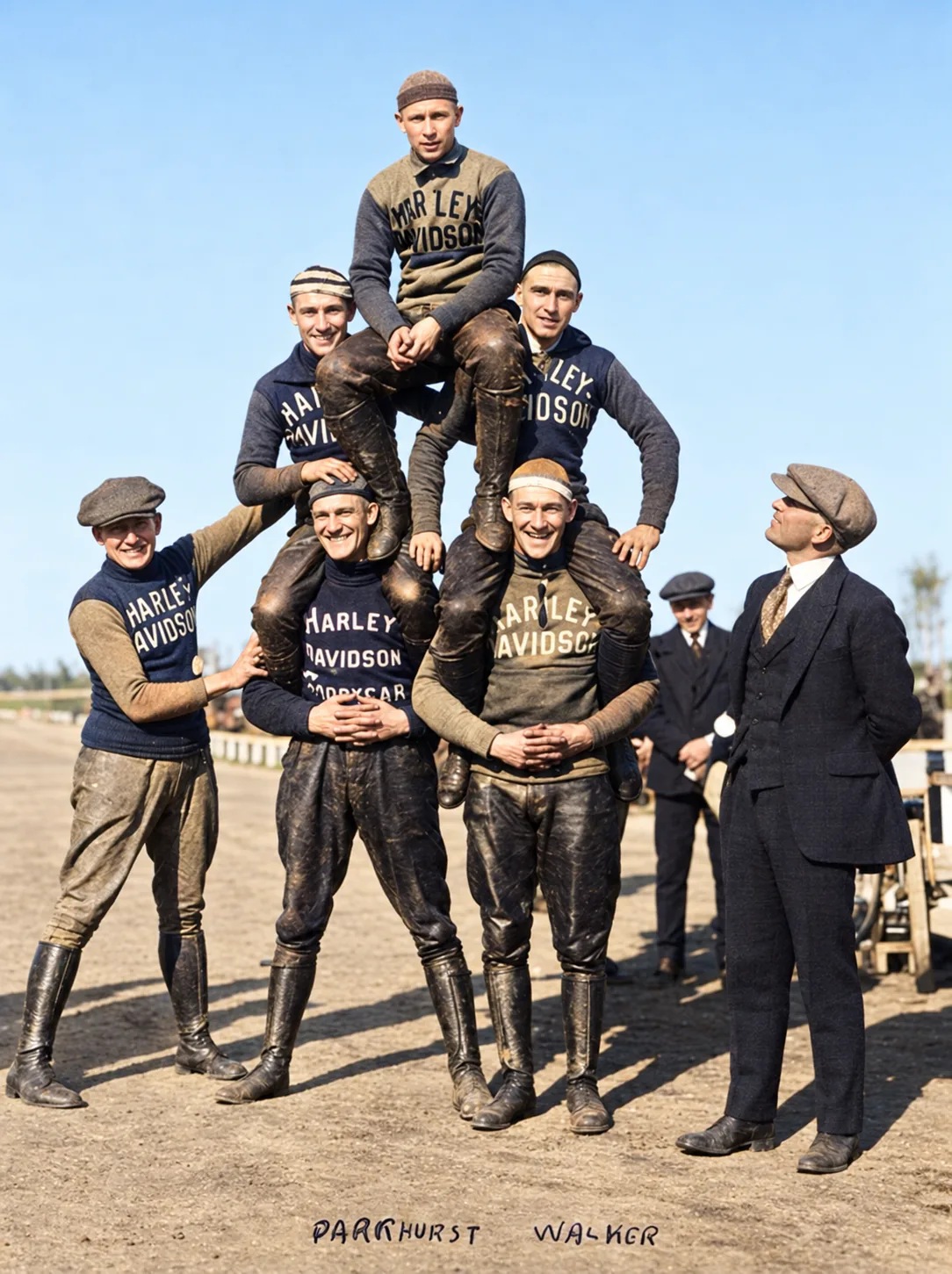
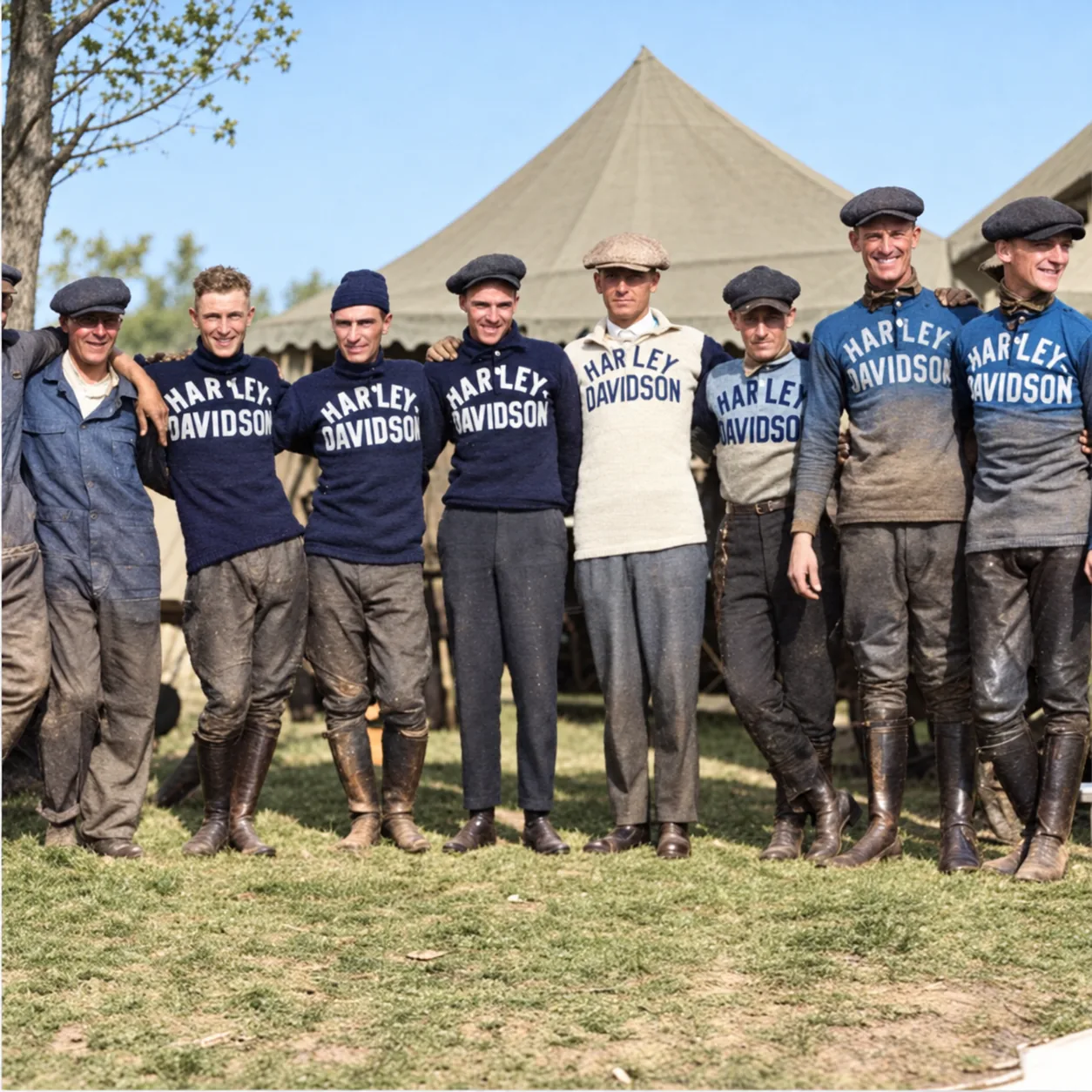
Restored and colorized photograph of the Harley-Davidson Wrecking Crew

Harley-Davidson

The Wrecking Crew comes to Marion

Preparations to make the 200-Mile International Road Race which is to come off September 6th at Marion, Ind., the biggest success ever, are coming along fine. Stock is being sold, the track is being fixed up, and arrangements are being made to accommodate a large number of visitors.

Since inquiries received would indicate that an even larger crowd than last year will be there on the day of the big race, we would suggest that if you are planning to go, that you make your reservations early. Every day letters are received from clubs and dealers all over the country with news that a large gathering is expecting to tour in a body from that section of the country to Marion for the race. So, don’t let any “grass grow under your feet” in making up your mind, but decide today, and make reservations before it is too late.

For the second consecutive time the Harley-Davidson wins the Marion 200-mile “Cornfield Classic”. Ray Weishaar with a pocket valve, in a superb exhibition of consistent speed, achieved victory in the remarkable time of 2 hours 48 minutes and 37 and 12-100ths seconds.

Last year’s record made by Leslie Parkhurst, also mounted on a pocket valve Harley-Davidson, was 3 hours, 6 minutes and 33 and 80-100ths seconds. Weishaar broke this record by 17 minutes 56 and 68-100th seconds. Weishaar’s average speed was over 73 miles an hour. Jim Davis also on a pocket valve Harley-Davidson, took third place.

The repeated winnings of the world’s greatest speed classics, Dodge City and Marion, again demonstrate and emphasize the superiority of the design and construction of the world’s best m o torcycle—the Harley-Davidson—winner of every important long distance race in the past four years.

Restored and colorized Cornfield Classic race posters over the monochrome background photograph

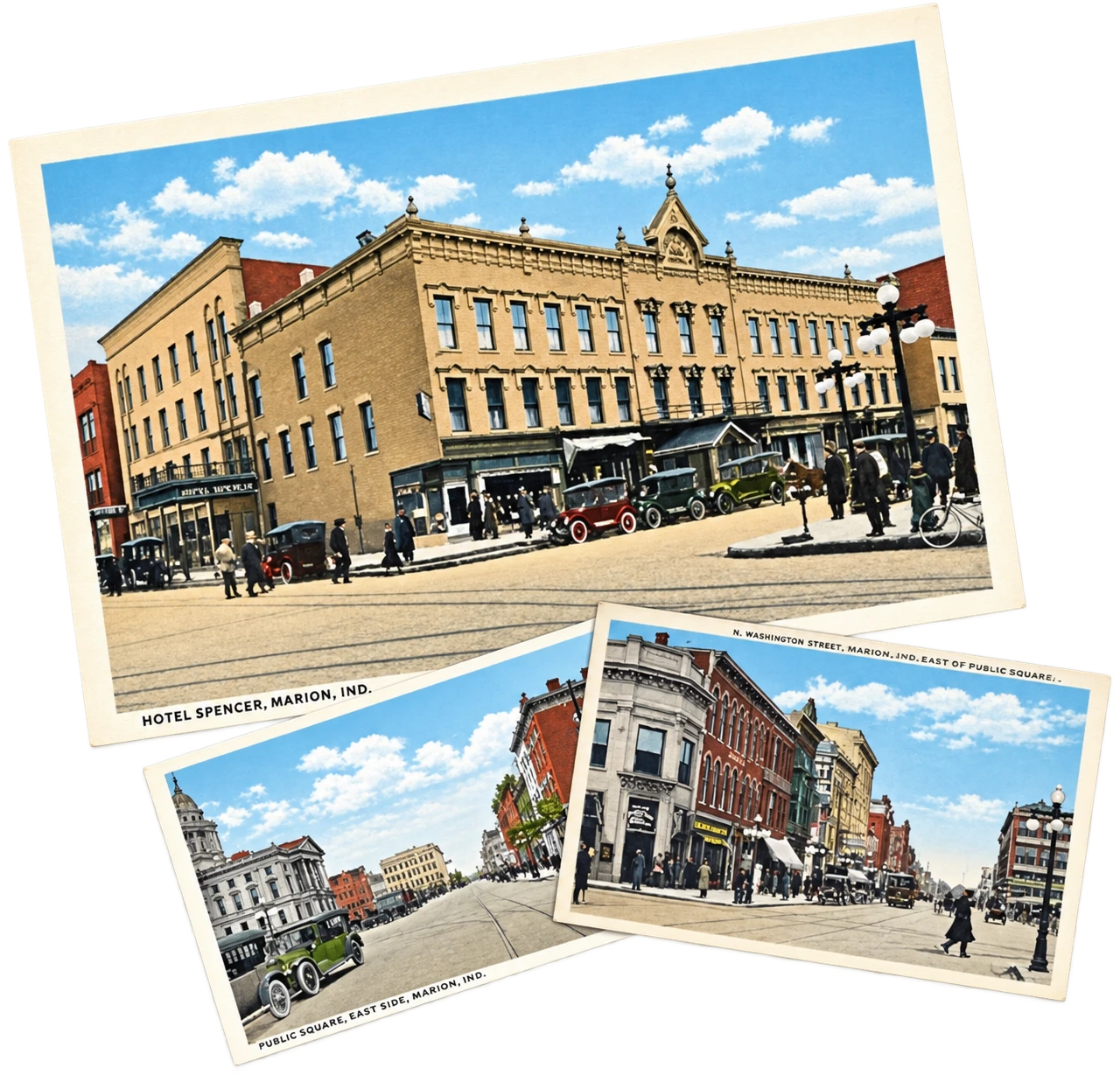
The Spencer Hotel is
the Heart of the Action.

Factory heads have already made reservations at the hotel and Marion is making preparations to give them a total welcome.

Restored historic postcards of the Spencer Hotel and downtown Marion

Special committees have been appointed to look after accommodations at hotels and lodging houses and private residences. No one will be dissapointed. It is estimated that Marion’s restaurants will take care of the thousands of visitors, as it is well equipped in this way. Entertainment a plenty will be provided.

In fact everything possible will be done to make the visitors realize that Marion appreciates the honor of staging the first International 200 mile Motorcycle Road Race, and is anxious to put in a bid for the event in 1920.

So many factory men and others have written in about accommodations, some even saying they would bring their tents in the belief that they could not obtain rooms. The Association of Commerce is getting a list of every available room and promises everybody who visits Marion a roof for them to sleep under. An information bureau will be established on the public square and riders will have no difficulty in obtaining rooms, the price of which will be regulated by the Association of Commerce.

This Association will also assure the motorcyclists that they will find the merchants in hearty accord with the racing association and with no desire to take advantage of visitors by boosting the price on their merchandise, meals, etc.

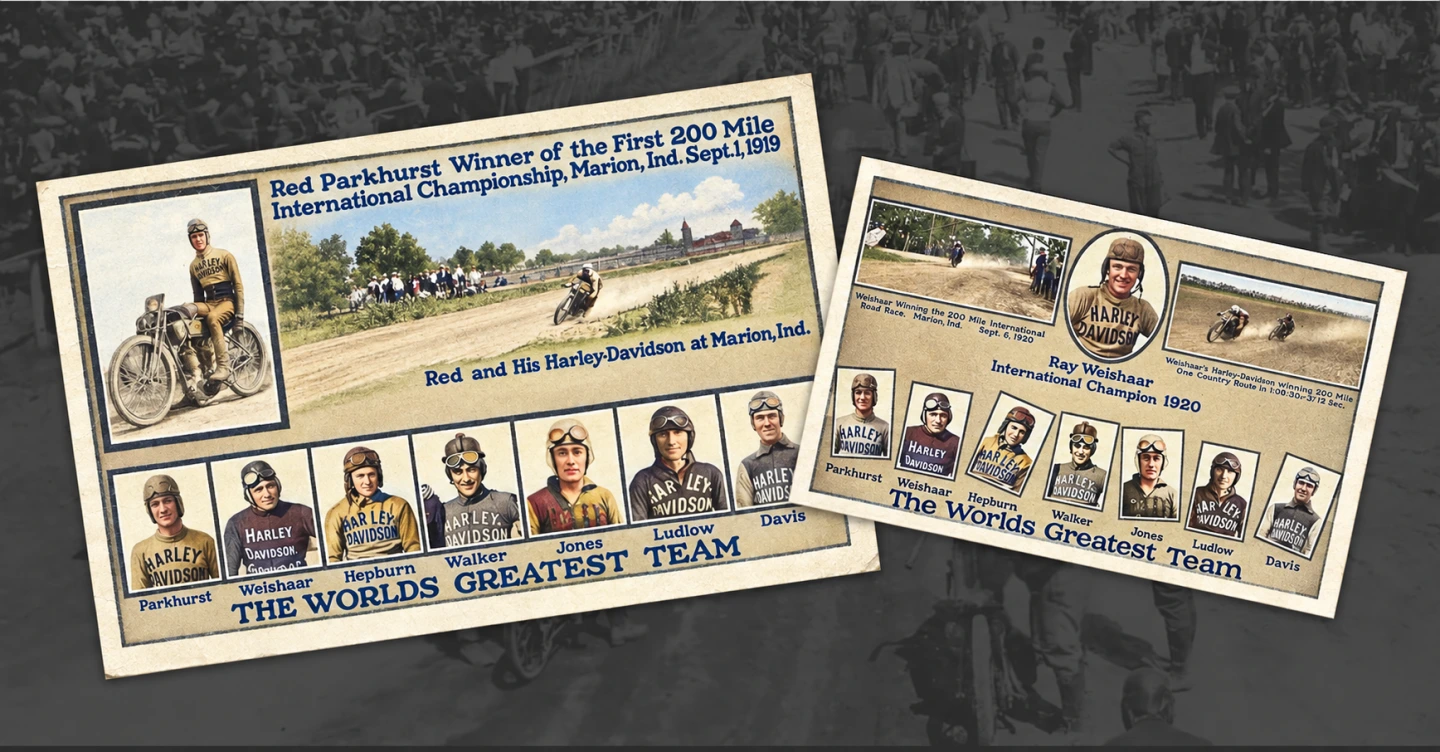
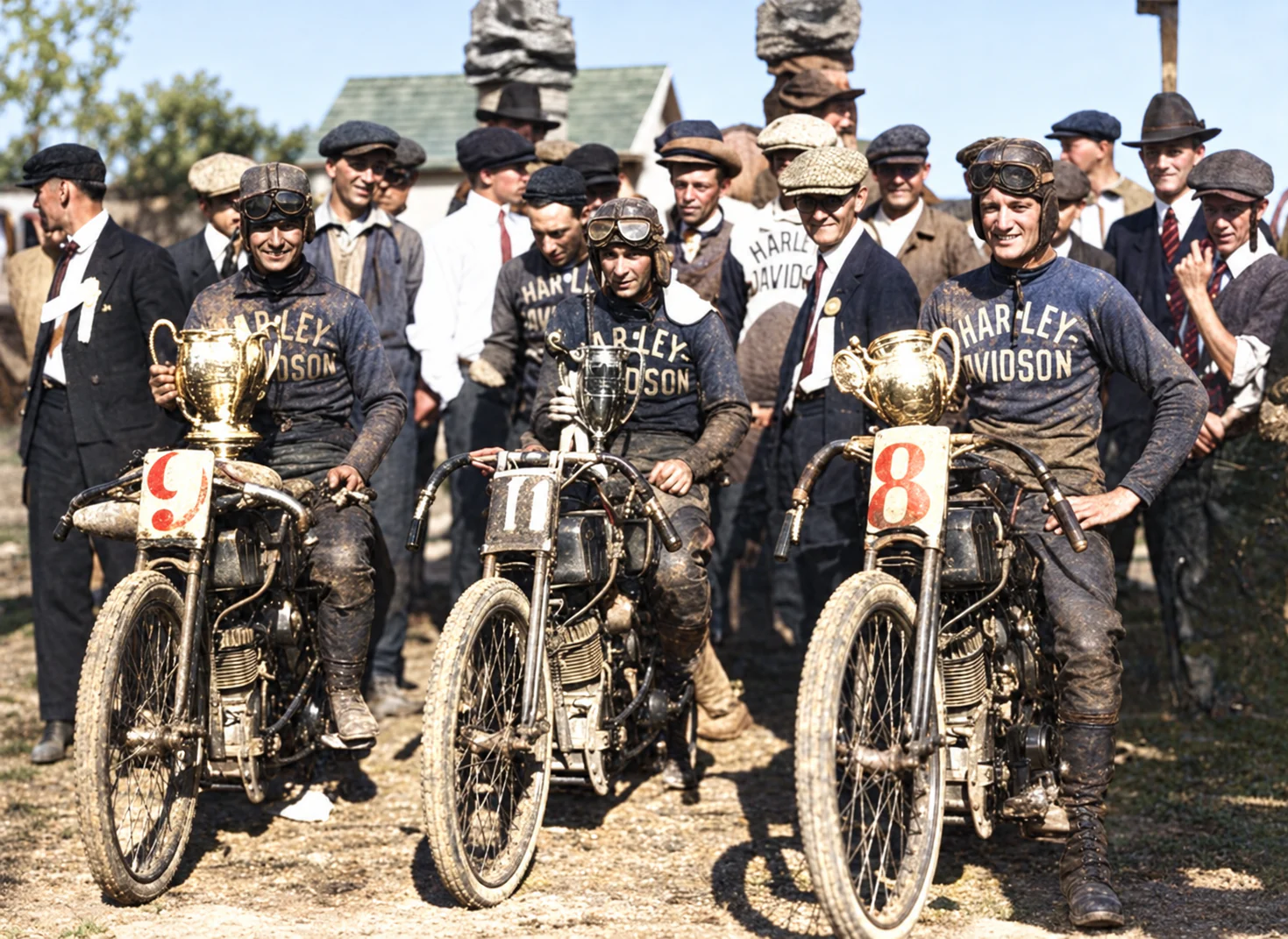
Restored and colorized portrait of Leslie Parkhurst Restored and colorized photograph of the Harley-Davidson team at the 1919 Marion motorcycle race

The Wrecking Crew

The Harley-Davidson Team

The Harley-Davidson people are sending at least sixteen men from their factory who will actually take part in the race. This number will include from six to eight riders, several pitmen and a team manager. They are also contemplating closing down their factory for the event in order that heads of departments and others will be able to attend.

Eight double rooms at the Spencer hotel have been reserved for the Harley-Davidson force—“We know that your city is going to be crowded,” says the letter, “and we do not want to occupy more space than we have to, but our men must be comfortable.”

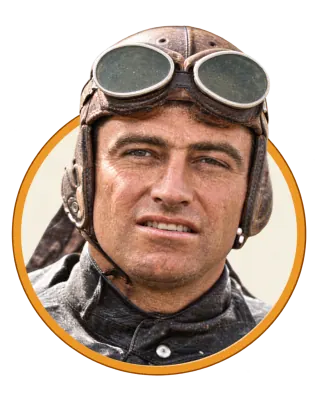
Portrait of Ralph Hepburn

Ralph Hepburn

Los Angeles, California

Competed in 15 Indianapolis 500 races between 1925 and 1948. Lost the 1937 race by a mere 2 seconds. Set an Indy Speedway track record in 1946 while driving a “Novi.” Killed in a wreck on the track while practicing for the 1948 Indianapolis 500.

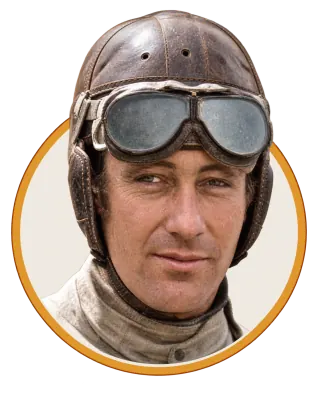
Portrait of Leslie Parkhurst

Leslie Parkhurst

Milwaukee, Wisconsin

Winner of the 1919 – Internal Road Race Championship at Marion. Parkhurst was a central member of the Harley-Davidson Wrecking Crew, and a highly successful and popular racer on both side-valve and eight-valve Harleys.

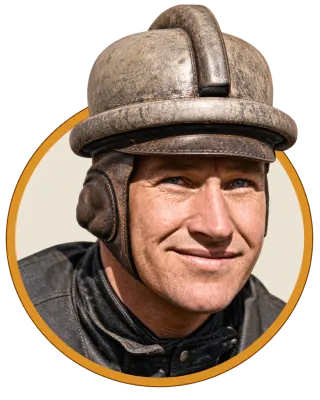
Portrait of Ray Weishaar

Ray Weishaar

Wichita, Kansas

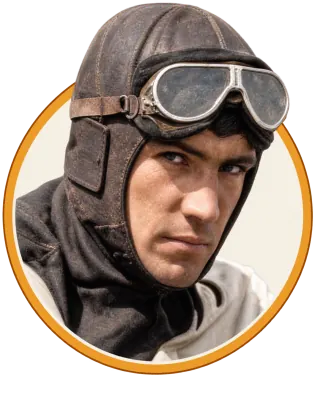
Winner of the 1920 – Internal Road Race Championship at Marion. He rode for the Harley-Davidson “Wrecking Crew,” and helped to popularize the nickname “hog” in reference to Harley-Davidson by carrying the team’s mascot, a small pig, around on victory laps.

Portrait of Maldwyn Jones

Maldwyn Jones

Lebanon, Ohio

A well-known racer and racing motorcycle builder of the 1910s and ’20s. Jones was perhaps the best dirt track racer in the Midwest. He won hundreds of regional dirt track events during his 13-year racing career.

Portrait of Otto Walker

Otto Walker

Lathrop, California

Walker was one of Harley-Davidson’s first factory riders. He won the first major race for the company, a FAM 300-mile road race in April of 1915. He earned the distinction of being the first rider to win a motorcycle race at an average race speed of over 100 mph.

Portrait of Jim Davis

Jim Davis

Columbus, Ohio

Davis rode for both the Harley-Davidson and Indian factory racing teams. In addition to being a great racing champion, Davis went on to become an AMA official, serving in various capacities including deputy chairman of competition.

Restored and colorized view of motorcycle racers speeding through dust at the 1919 Marion race

Springfield, Massachusetts

The Indian Team

The Indian team have officially entered for the race and will consist of Gene Walker, Teddy Carroll, Baxter Potter, Percy Coleman and Roy Artley. With the entry of Percy Coleman the race assumes an international aspect, as Coleman is the motorcycle champion of New Zealand. He is known as a dare-devil rider and his presence at Marion will assure the breaking of some long-standing motorcycle records.

Indian Motorcycle logo
Portrait of Gene Walker

Gene Walker

Birmingham, Alabama

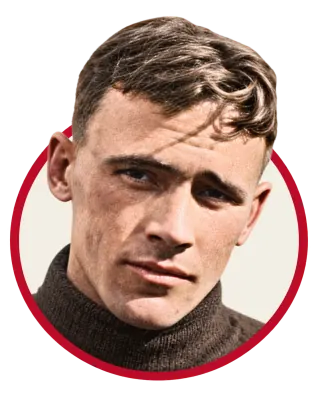
Walker was an American motorcycle flat track racer who was one of the first riders from the South to become nationally known, winning 19 championships in a 10-year career that ended with his death at the peak of his success.

Portrait of Baxter Potter

Baxter Potter

Springfield, Mass

The Underdog kid, Potter’s high-profile Endurance Run victories for Indian, earned him a spot at Marion and national recognition alongside other top racers of the era. He could hardly believe his luck when he lined up for the start of the national with all the cheers and accolades given to factory riders.

Portrait of Roy Artley

Roy Artley

SanDiego, California

Roy Artley broke the Canada to Mexico record by nearly nine hours, making the journey in just over seventy-two hours. Holder of San Francisco to Los Angeles Motorcycle Record at Ten Hours & Four Minutes. Artley beat the record of the continuous-running Cadillac automobile for 471 miles.

Portrait of Don Marks

Don Marks

U.S.A

Don Marks raced for Indian during the sport’s postwar revival. After lining up with the factory team at the 1919 Marion road race, he won the 25-mile national at South Bend in 1920 and placed third in the 25-mile feature at North Randall later that year. In 1921, he also beat Indian teammate Albert “Shrimp” Burns in a five-mile race at Toledo’s Fort Miami track.

Portrait of Percy Coleman

Percy Coleman

New Zealand

In 1919 Coleman visited the United States, where he competed in two events as an official rider for the Indian Motor Cycle Company. The first was a 200-lap race in Los Angeles. He finished sixth, but was the first rider home on an Indian. His second ride was a 200-mile road race at Marion, Indiana, in which he was forced to retire with engine trouble.

Portrait of Teddy Caroll

Teddy Caroll

Springfield, Mass

Teddy was one of the original factory test riders for the Indian Motocycle company and a member of the first generation of boys who had “caught the fever” to race a motorized bicycle. Always a contender, and sometimes a champion, Edward “Teddy” Carroll was proud to wear the red and white colors of the Indian factory team.

Chicago, Illinois

The Excelsior Team

The Excelsior representative, Mr. Geo. Evans, was recently in Marion and gave the course a careful inspection and pronounced it as being a great course. Mr. Evans conferred with Mr. G. C. Har- wood, local dealer for the Excelsior, concerning that company’s program in connection with the big race. The Excelsior Company has announced they will have at least four entries at Marion, Labor Day.

Excelsior motorcycle logo
Portrait of Floyd Clymer

Floyd Clymer

Indianapolis, In

Floyd Clymer was a pioneer in the sport of motorcycling, was a racer, a motorcycle dealer and distributor, a magazine publisher, a racing promoter, an author, and a motorcycle manufacturer. In his short time on Earth, Clymer had accomplished what few could hope to achieve in five lifetimes, let alone one.

Portrait of Bob Perry

Bob Perry

Bozeman, Montana

Perry won four nationals during his career. He was said to have possessed the most fluid racing style of the riders of his era. Perry died on January 2, 1920, from injuries suffered while qualifying for a race in Los Angeles. The entire motorcycling community mourned the loss of Perry, who was considered by most of his fellow competitors to be the friendliest and most admired rider of his day.

Portrait of Joe Wolters

Joe Wolters

Denver, Colorado

“Farmer” Joe Wolters was one of the Excelsior team champs. A bulldog type and one who combines skillfull control of his machine with headwork and staying qualitites, deliberatly taking advantage of every detail of the track, wind and other conditions. He’s also probably the only man alive to drive a racing motorcycle smack through an airplane—and live to tell about it.

Portrait of Warren Cropp

Warren Cropp

Hammond, Indiana

Cropp entered the race bearing the scars of a spill at Crown Point a short time before, and had to fight old man jinx from his unlucky start to his speedy finish.

Portrait of Wells Bennett

Wells Bennett

Wichita, Kansas

Wells Bennett was a leading racer, hillclimber and cross-country specialist. He is best known for his 24-hour, transcontinental and Canada-to-Mexico records. By the mid 1920s, Bennett scaled back his racing activities to run his Excelsior motorcycle dealership in Portland, Oregon. He sold his motorcycle business in 1930 and took a position as a service rep for Ford Motor Co.

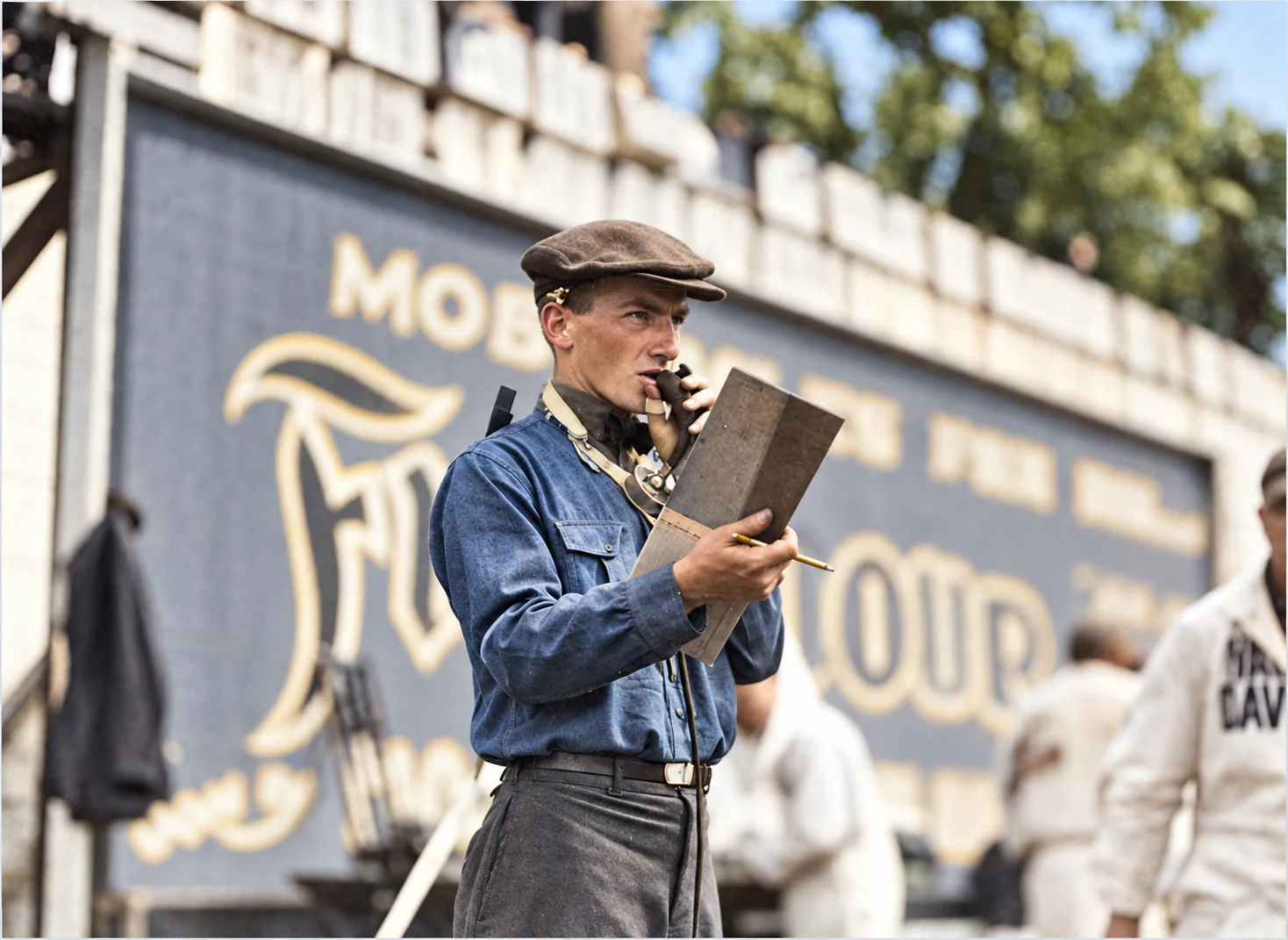
Restored and colorized portrait of a judge at the 1919 Marion motorcycle race Restored and colorized group portrait of winners at the 1919 Marion motorcycle race

Converse, Indiana

The Local Star,
Ray Creviston

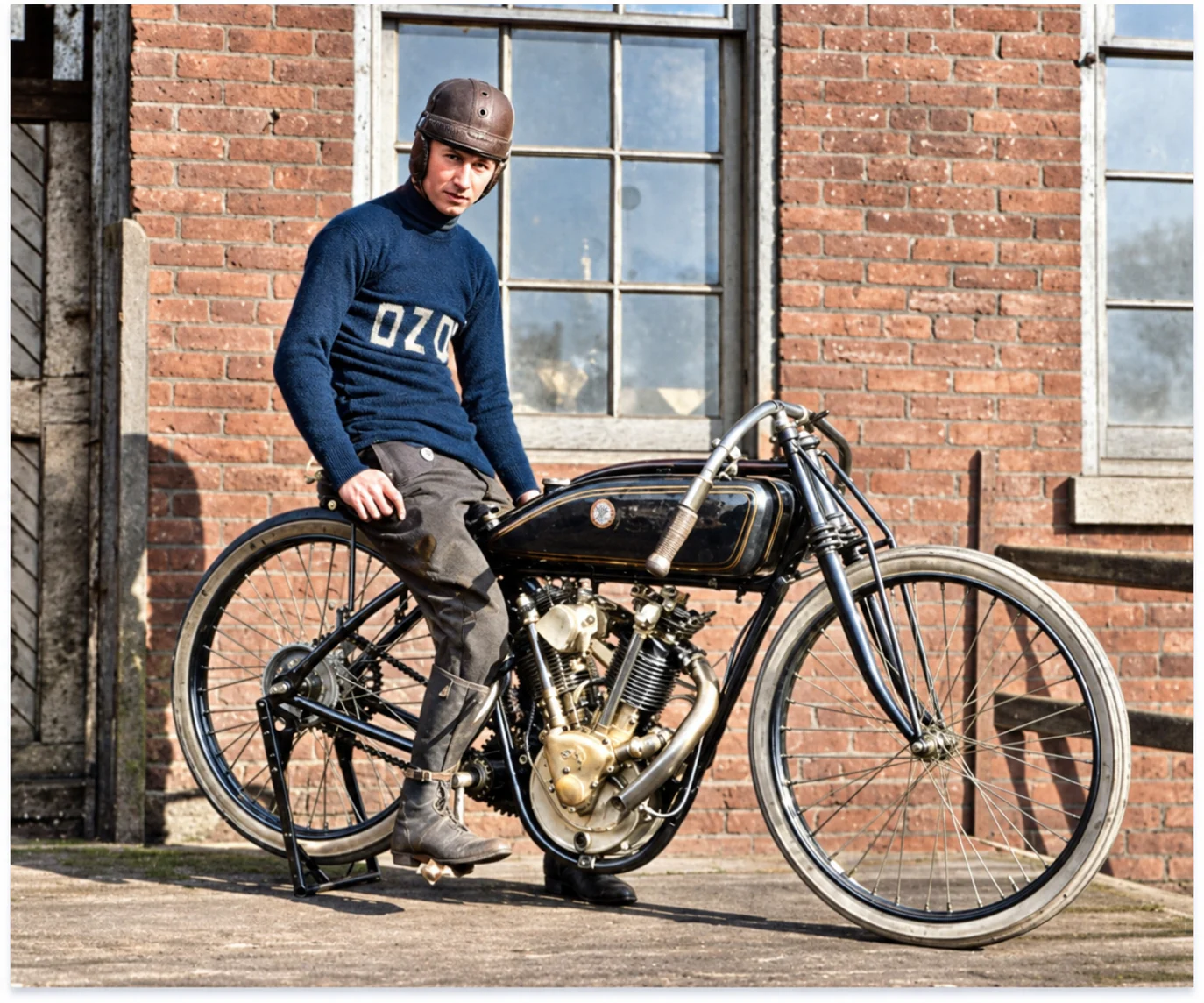
Ray Creviston of Converse, Indiana was a motorcycle racing early star. Creviston first began his career on the Converse Fairgrounds half mile track in 1912. He disappointed local fans by not appearing at the Converse Fairgrounds in 1914, but set the one mile world record in July at St. Louis. Racing for the Indian Motorcycle Company, Ray was Indian’s best promotion against Harley-Davidson in the early years of motorcycle racing.

After traveling the world racing on his Indian motorcycle, Ray eventually returned to Converse, purchased a farm, and as local legend tells it, “never drove above thirty miles per hour.”

Restored and colorized portrait of Ray Creviston seated on an early racing motorcycle
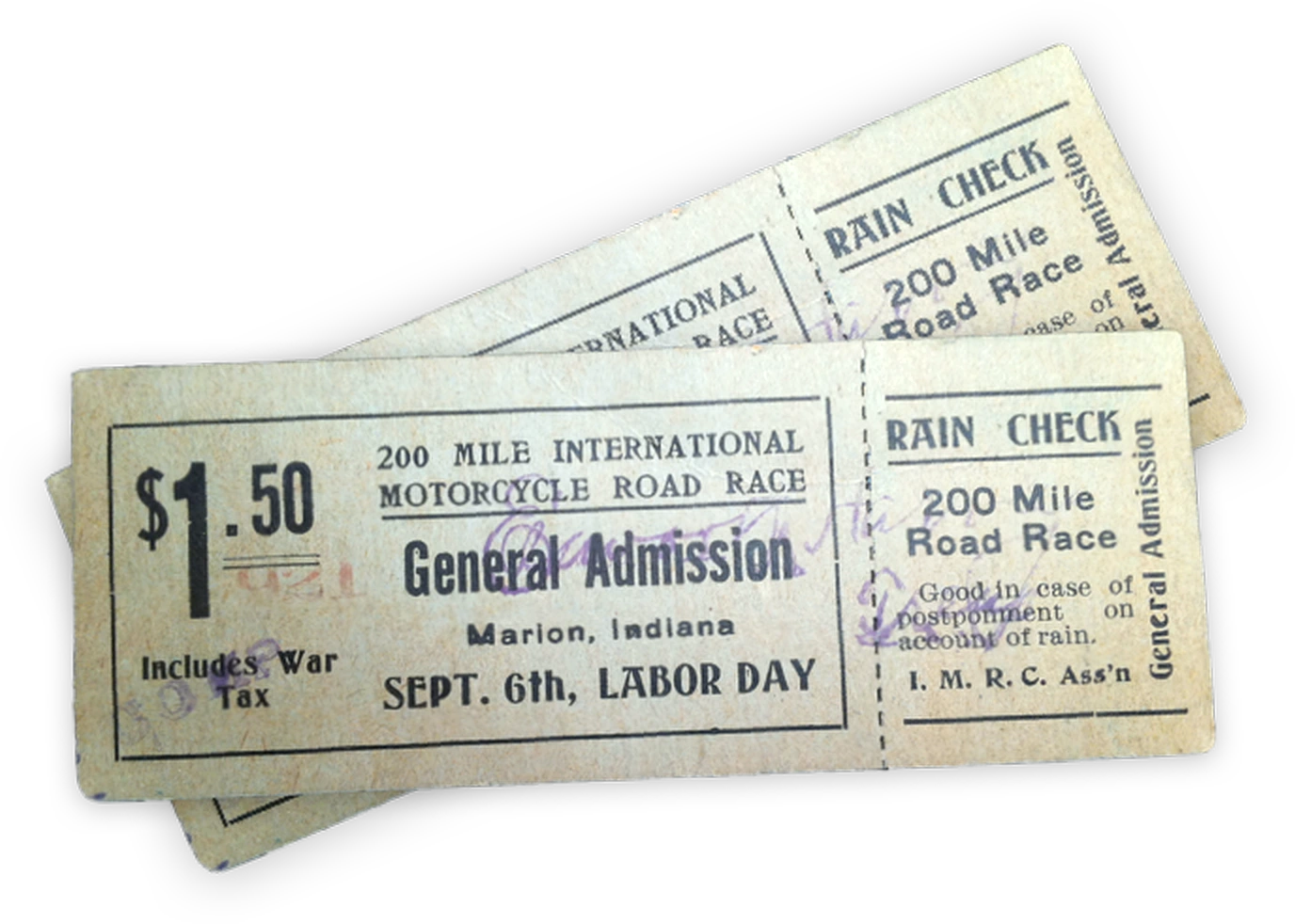
Restored and sharpened tickets for the 1920 Marion motorcycle road race

Marion promises to present a gala appearance when the thousands of tourist sarrive for the big road race on Labor Day. The latest comes from the Harley-Davidson factory, where a tour will assume a pick-up affair that should rolls several hundred riders in to the Hoosier city. Their itinerary takes in several cities in Wisconsin, Minnesota, Illinois and Indiana.

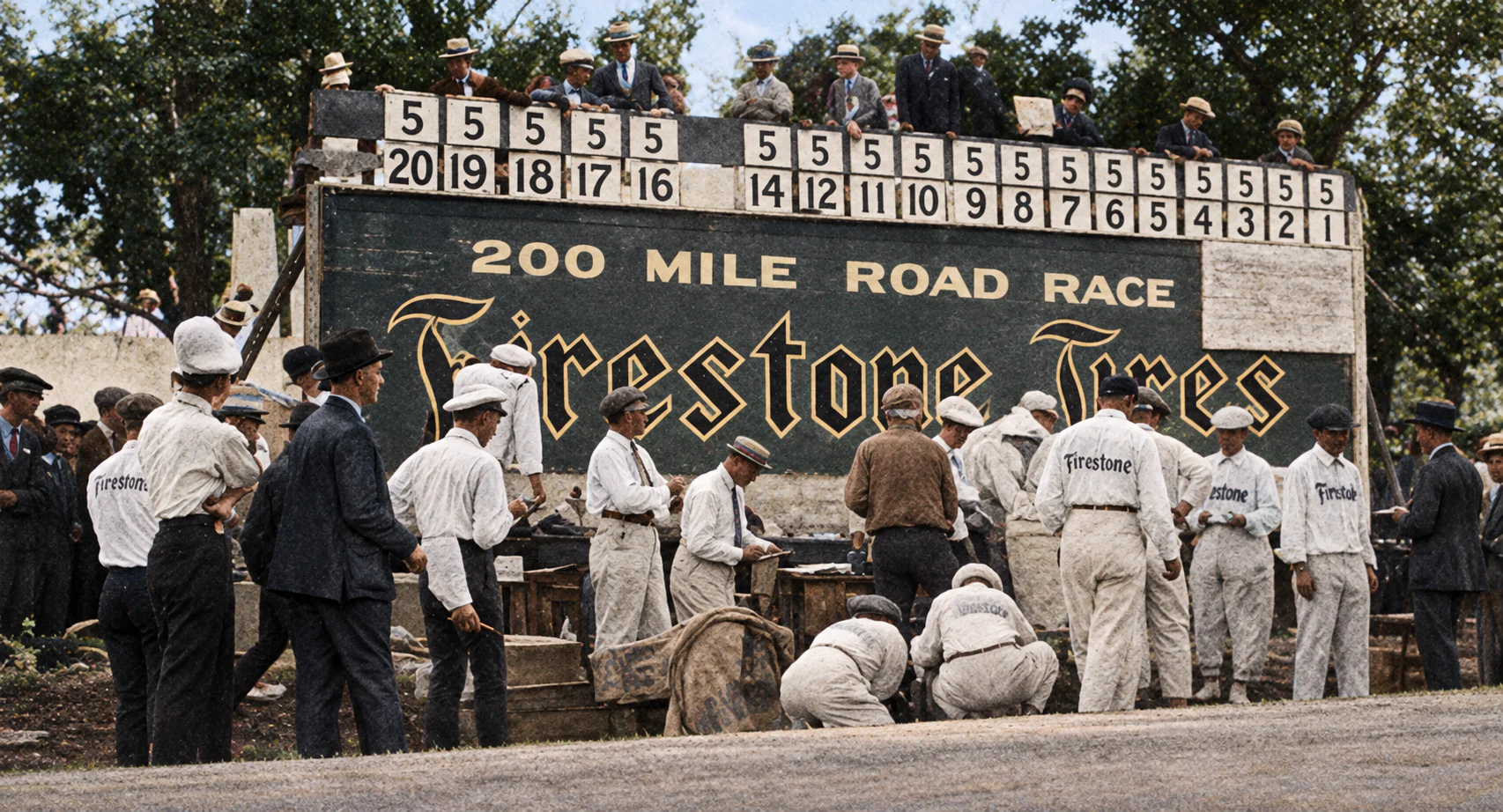
Restored and colorized race scoreboard from the Cornfield Classic

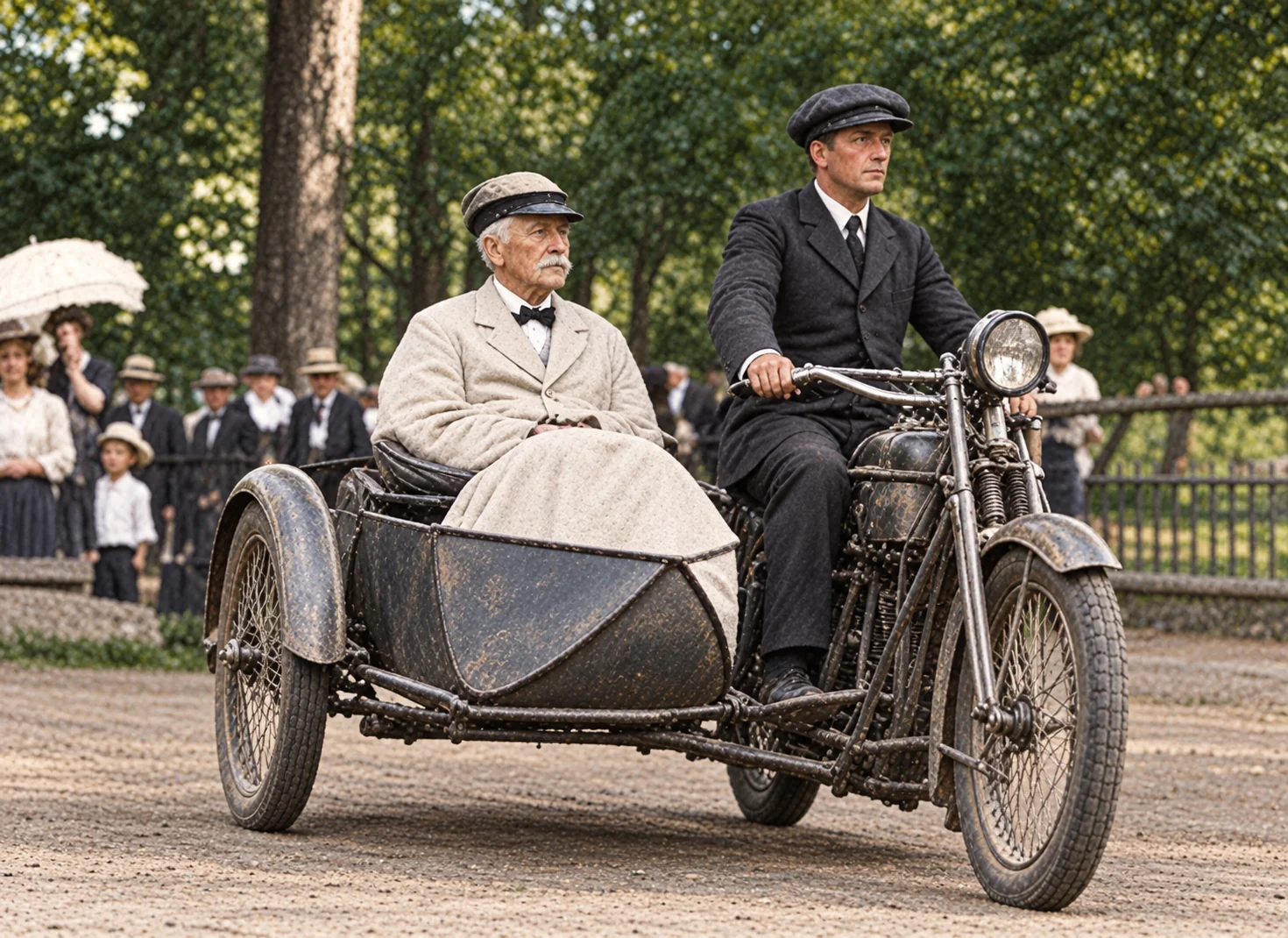
Civil War veterans of the local National Soldiers’ Home were given rides in sidecars on the race course. Red Parkhurst was among the riders, and cardboard tags that read “I have donated my sidecar for the Old Soldiers’ Outing—Have You?” spread like wildfire throughout the weekend.

Restored and colorized view of a Civil War veteran riding in a motorcycle sidecar at the 1919 Marion race

Marion, Indiana · 1920

Home of the Hog

But the most historic moment of 1920 came after the race. Earlier in the day, Harley-Davidson’s Ray Weishaar adopted a runt piglet from a local farm and kept it close by as he wandered the paddocks.

Weishaar won the race with a blistering average speed of more than 71 miles per hour—a new record for a 200-mile event. Weishaar included his new friend, “Johnny,” in a post-race photo op, prompting journalists to start using the word “hog” in reference to Harley-Davidson® riders and their motorcycles.

And so the great race progresses. The 40th(finishing) lap nears. As Weishaar vaults over the crossroad, his strong grip on the handle bars keeping his front wheel steady, the crowd cheers him again and again. Signal men keep him posted on his position and the distance to be traveled. The 39th lap is completed. Everybody moves about, trying to conceal the nervousness that has taken hold of him. Surely the Jinx won’t camp on Ray’s time so close to the finish.

Cameras are set up. The movie men give a preliminary turn to each crank. The checkered flag unfolds. There are shouts of “Here he comes,” “He’s coming!”, “Hurray!”, etc. Weishaar flashes past, the checkered flag unfolds. There are shouts of “Here he comes,” “He’s coming!”, “Hurray!”, etc. Weishaar flashes past, the checkered flag dropping before him. It’s all over and the crowd lets loose in a thunder of shouts, stamping and hand clasping. Second man rolls in a lap behind. Jim Davis arrives three minutes later, taking third place.

Weishaar trundles slowly up to the Harley-Davidson pit and is hobsonized by lady friends and shaken and pounded by his team-mates and factory gang. What do you think were his first words after the race ended? No! Guess again. No, not that either. “Where’s my pig?” Was the question he flung at the admiring crowd. Piggy Mascot was led out and Ray and his porcine majesty retired to a grass plot back of the pits and enjoyed a bottle of milk.

Those races—that first one, especially—were about a rebirth of motorcycling, a triumphant return of the sport so many still loved. To quote one journalist in 1919, “The game is on again.”
Restored and colorized portrait of Ray Weishaar with the pig mascot after the Marion motorcycle race